
Menopause and your skin: what changes and how to care for it.
Menopause can bring changes throughout your body, and your skin is no exception.
You might notice that the skincare routine you’ve relied on for years suddenly doesn’t feel quite right. Your skin may feel drier, more sensitive or behave differently than it used to.
These changes are closely linked to fluctuating and declining hormone levels. Understanding what’s happening beneath the surface can make it easier to give your skin what it needs.
What are the stages of menopause?
We often talk about “menopause” as one long period of time, but there are actually different stages to the transition. Everyone experiences them differently, and there isn't one set age or timeline.
Perimenopause
When does it happen?
It commonly begins during your 40s, although it can start earlier.
Perimenopause is the transition leading up to menopause. During this time, hormone levels begin to fluctuate and periods can become irregular. You may also begin to experience symptoms such as hot flushes, difficulty sleeping, changes in mood and changes to your skin.
Menopause
When does it happen?
Menopause usually happens between the ages of 45 and 55, with the average age in the UK being 51. It can, however, happen earlier.
Menopause is technically a point in time rather than a long stage. You reach menopause once you haven't had a period for 12 consecutive months, assuming you're not using hormonal contraception that affects your periods.
So, what happens to your skin?
One of the main hormones changing throughout menopause is oestrogen. As levels decline, you may start to notice changes in how your skin looks and feels.
Your skin may feel drier
Your skin becomes less able to retain moisture, in fact, the NHS lists dry and itchy skin among the possible symptoms experienced during perimenopause and menopause.
This can mean that products or routines that previously worked for you may suddenly feel too harsh or simply not hydrating enough.
Your skin may become more sensitive
With changes to your skin, you may find it becomes more easily irritated.
This is where doing more isn't necessarily better. A simple routine focused on gentle cleansing, hydration and protecting your skin can be a good place to start.
You might experience unexpected breakouts
Breakouts aren't only something that happens during your teenage years.
Hormonal fluctuations can coincide with changes in oil production and, for some people, spots may appear during perimenopause even if breakouts haven't been a concern for years.
It can feel particularly frustrating when you're dealing with breakouts and dryness at the same time, which is why treating your skin gently is important.
You may notice changes in firmness and texture
Collagen plays an important role in keeping skin feeling firm and supported. Hormonal changes associated with menopause can affect collagen, which can contribute to changes in skin thickness, firmness and texture over time.
Rather than trying to resolve every change at once, think about supporting your skin and adapting your routine as its needs change.
How to care for your skin through menopause
There isn't one perfect “menopause skincare routine”. Your skin is individual, so pay attention to how it feels and adjust accordingly.
A few simple products can help.
1. Keep cleansing gentle
If your skin feels drier or more sensitive than it used to, avoid leaving it feeling stripped after cleansing.
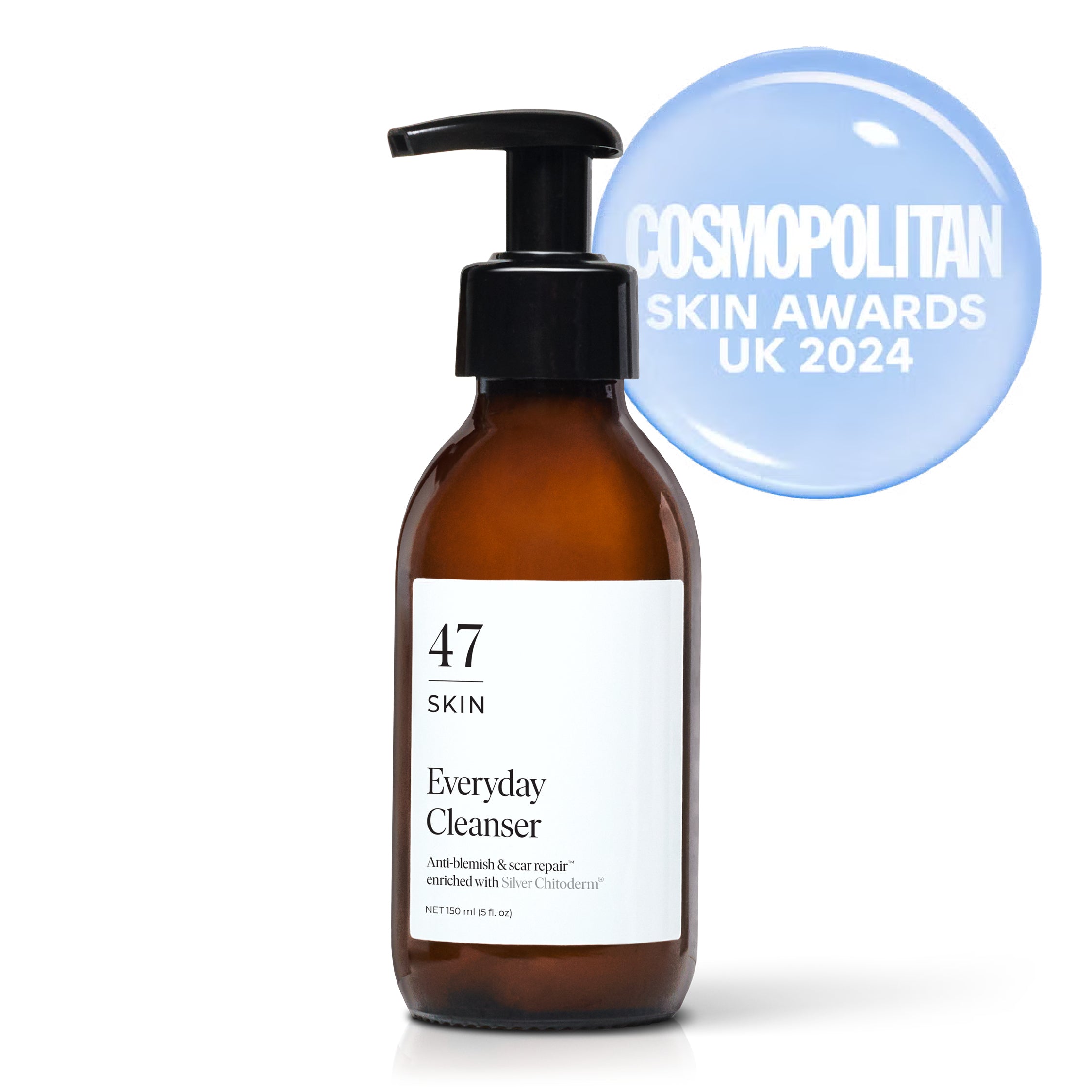
Our Everyday Cleanser gently removes daily build-up while helping leave skin feeling soft and hydrated.
2. Target blemishes
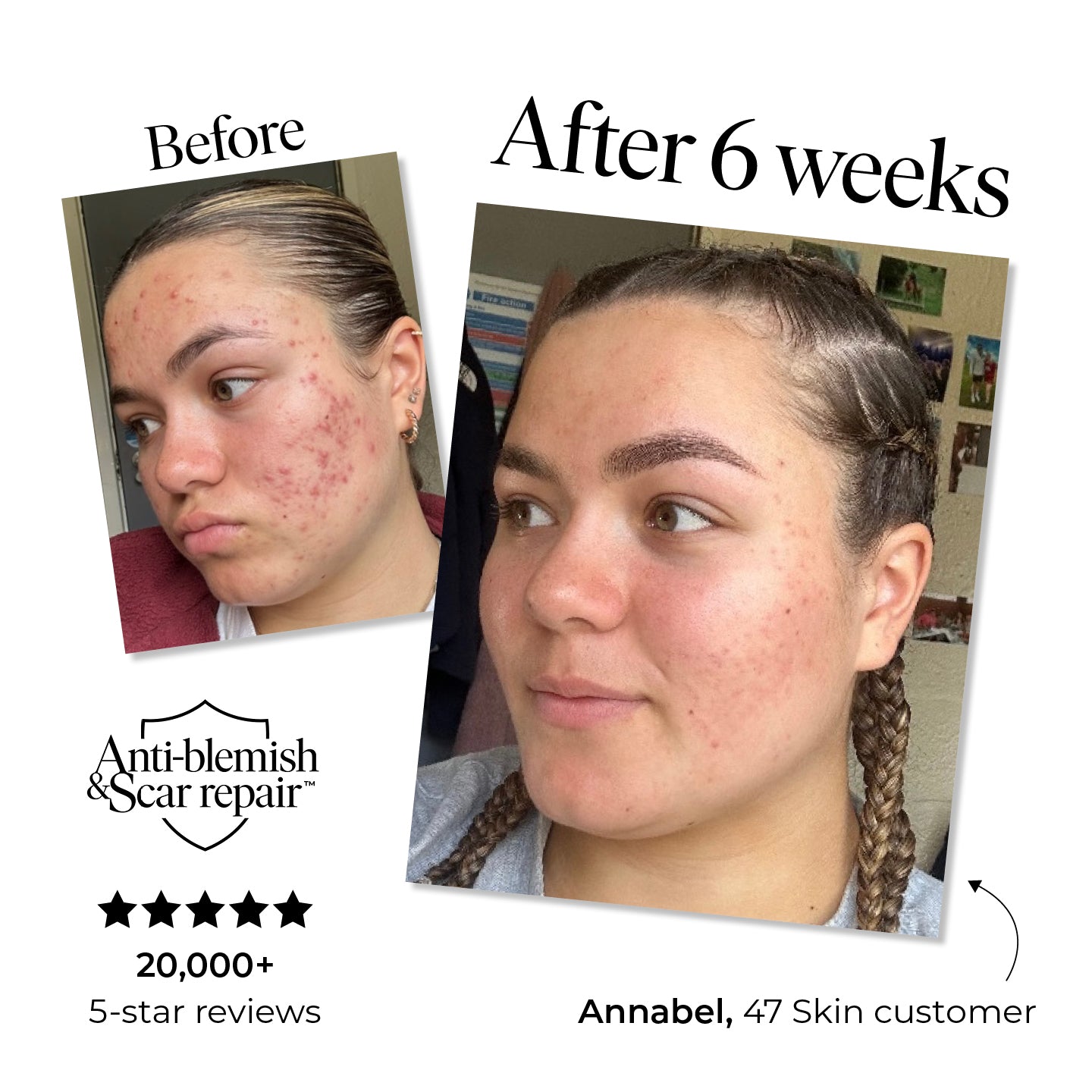
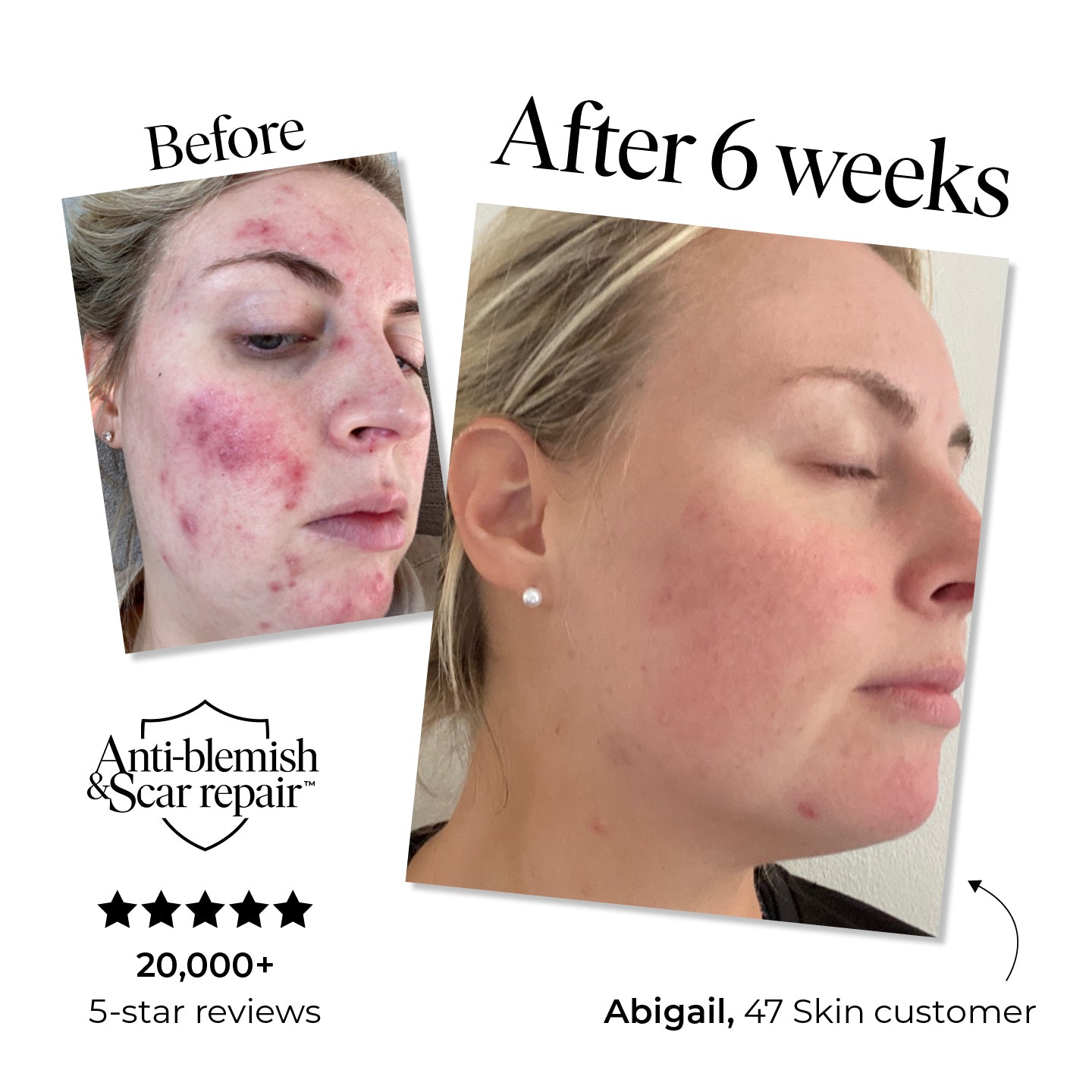
Changes in your skin during perimenopause and menopause can sometimes include blemishes, even if spots haven't been a concern for you before.
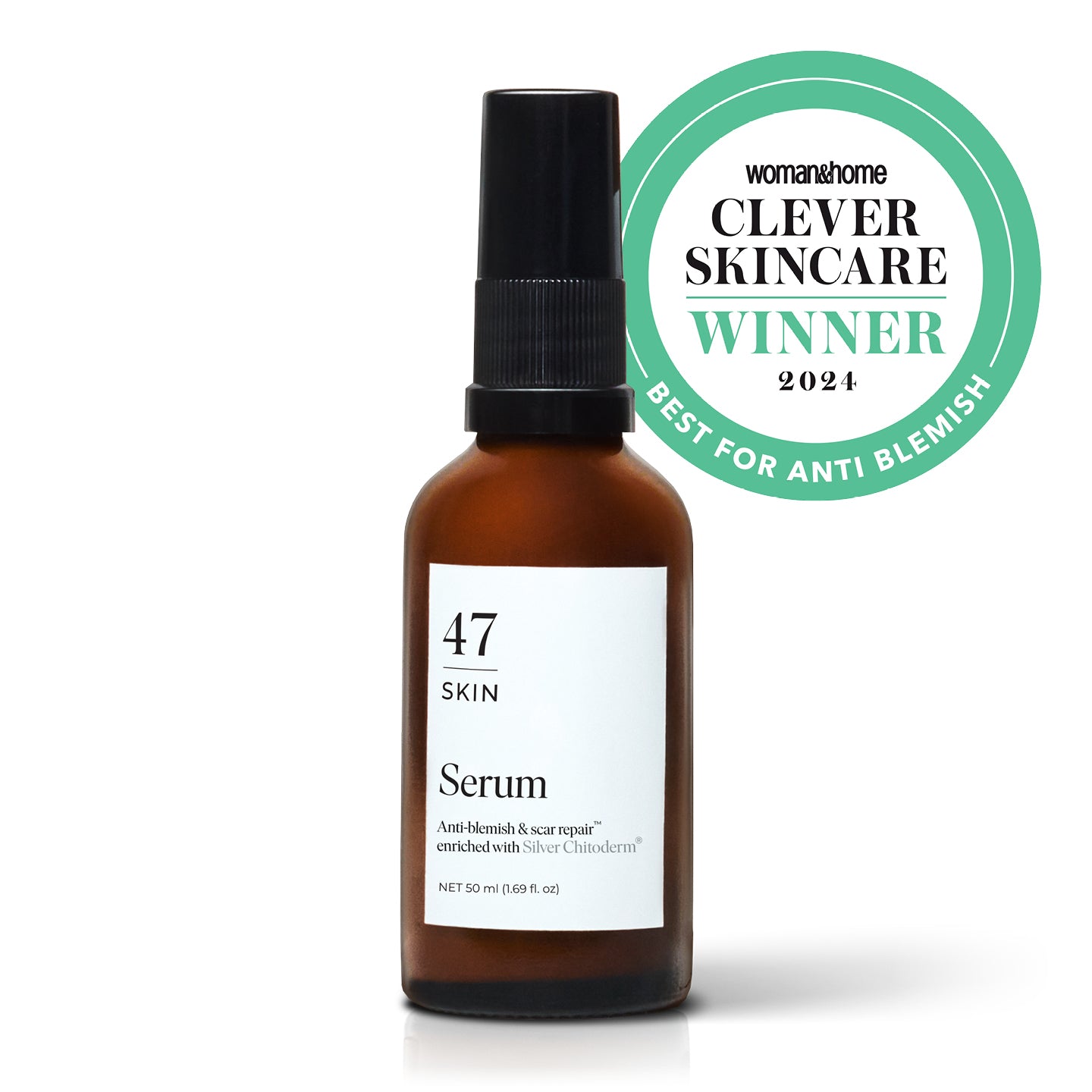
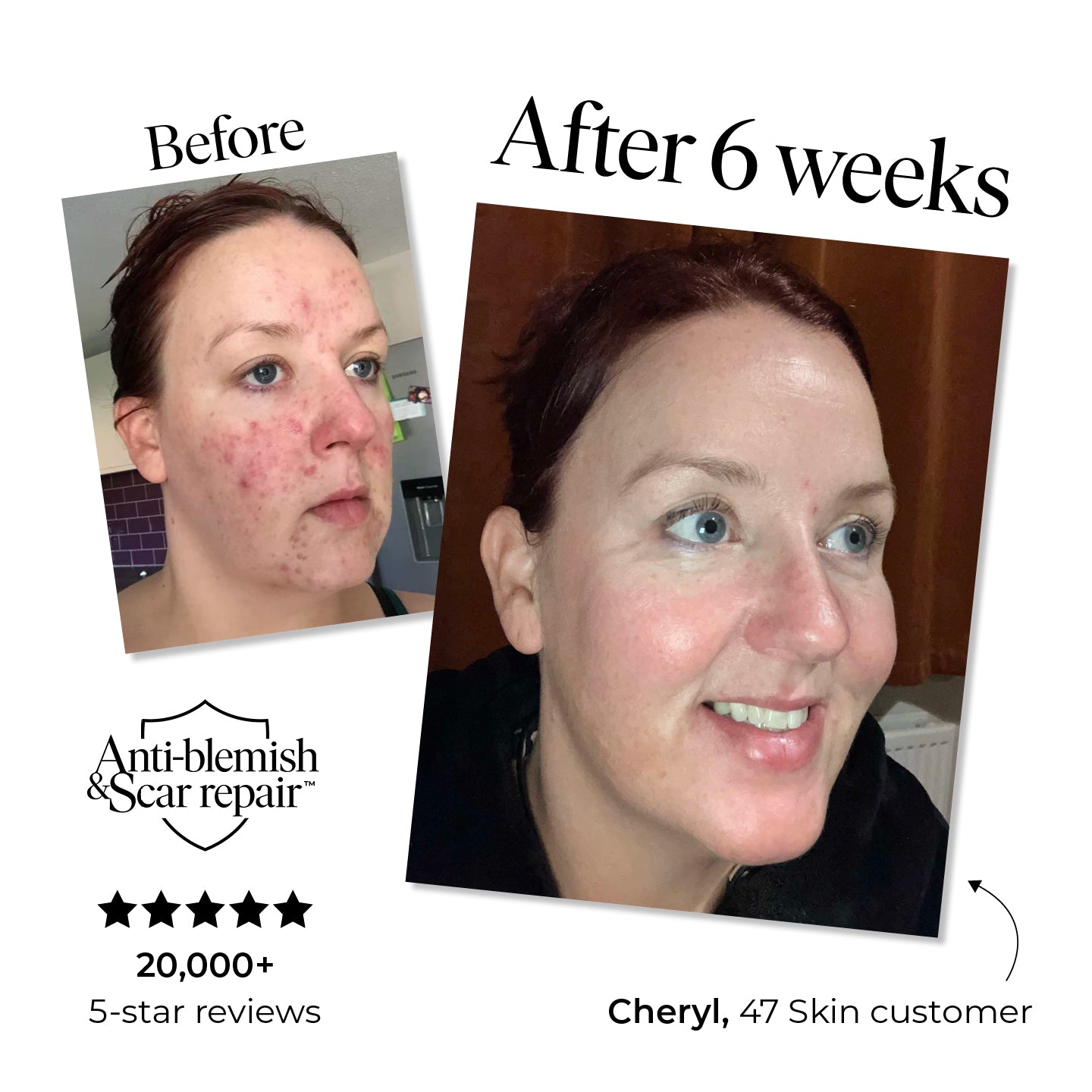
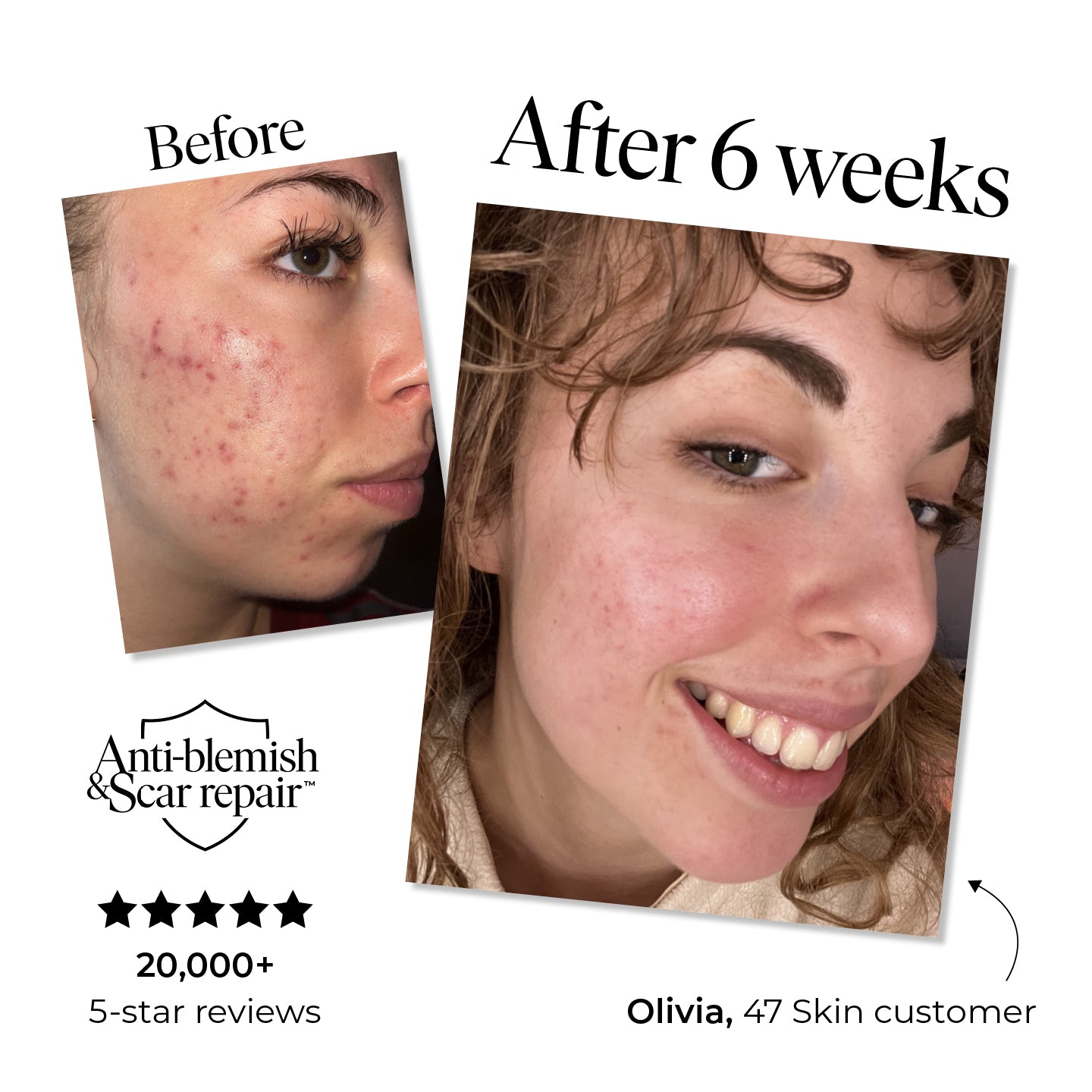
If you're noticing more breakouts, our Anti-Blemish & Scar Repair Serum can be easily added to your routine after cleansing. Powered by Silver Chitoderm®, it's clinically proven to reduce blemishes by 47% and reduce the appearance of post-blemish marks by 42%.*
3. Make hydration a priority
If your skin is becoming drier, hydration deserves a little more attention.
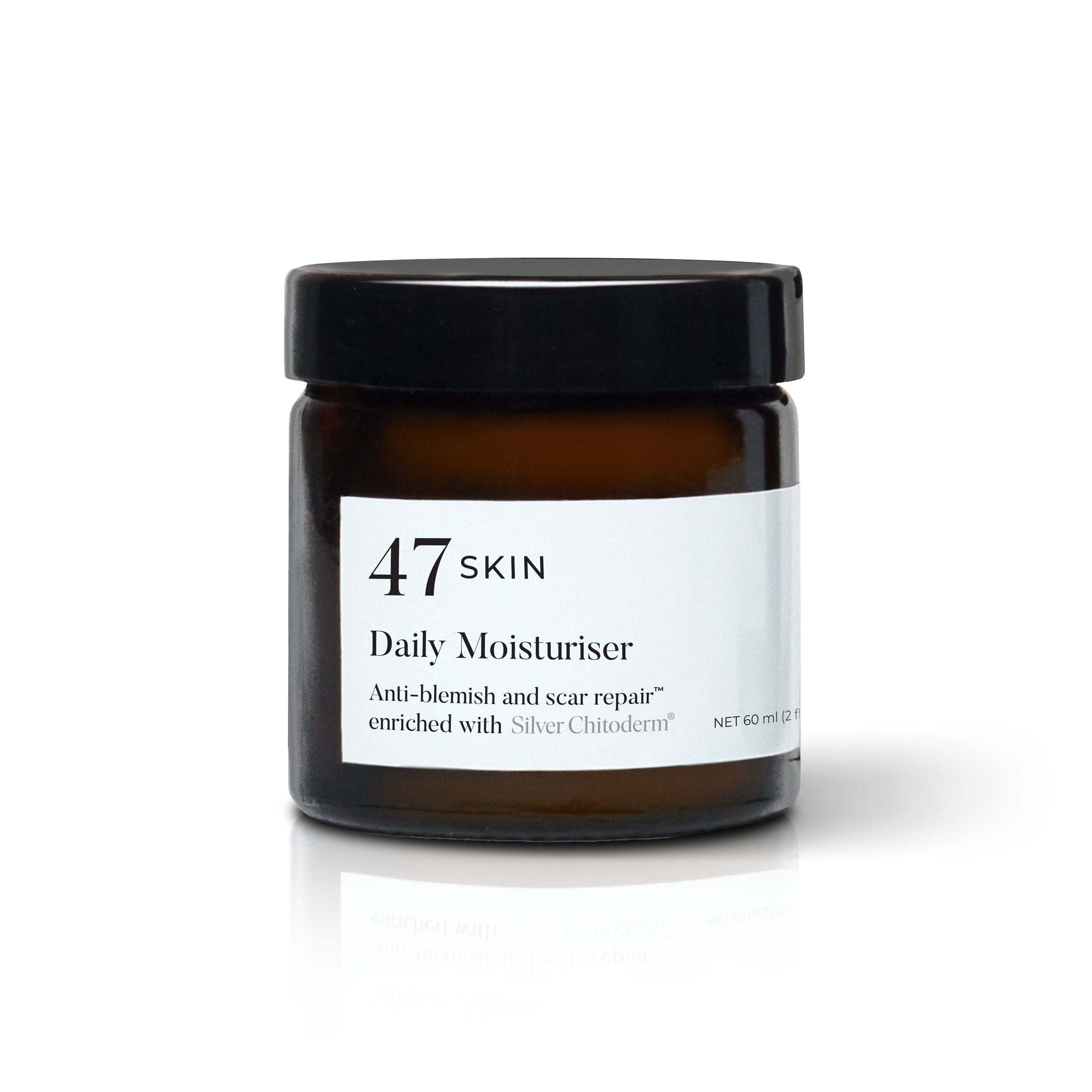
Our Anti-Blemish & Scar Repair Daily Moisturiser has a lightweight formula designed to hydrate without clogging pores, while our unique Silver Chitoderm® technology helps target blemish-causing bacteria.
4. Don't forget SPF
Sun protection remains important at every stage of life.
Wearing SPF helps protect your skin from UV damage, so make it the final step of your morning routine - menopause or not.
Our Daily SPF 30 provides daily protection while being designed with blemish-prone skin in mind.
*Based on a 12-week independent clinical study of 30 adults with blemish- prone skin using the 47 Skin Anti-blemish & Scar Repair Serum.